THERAPIES AT ARISTA RECOVERY
Equine Therapy for Addiction and Mental Health
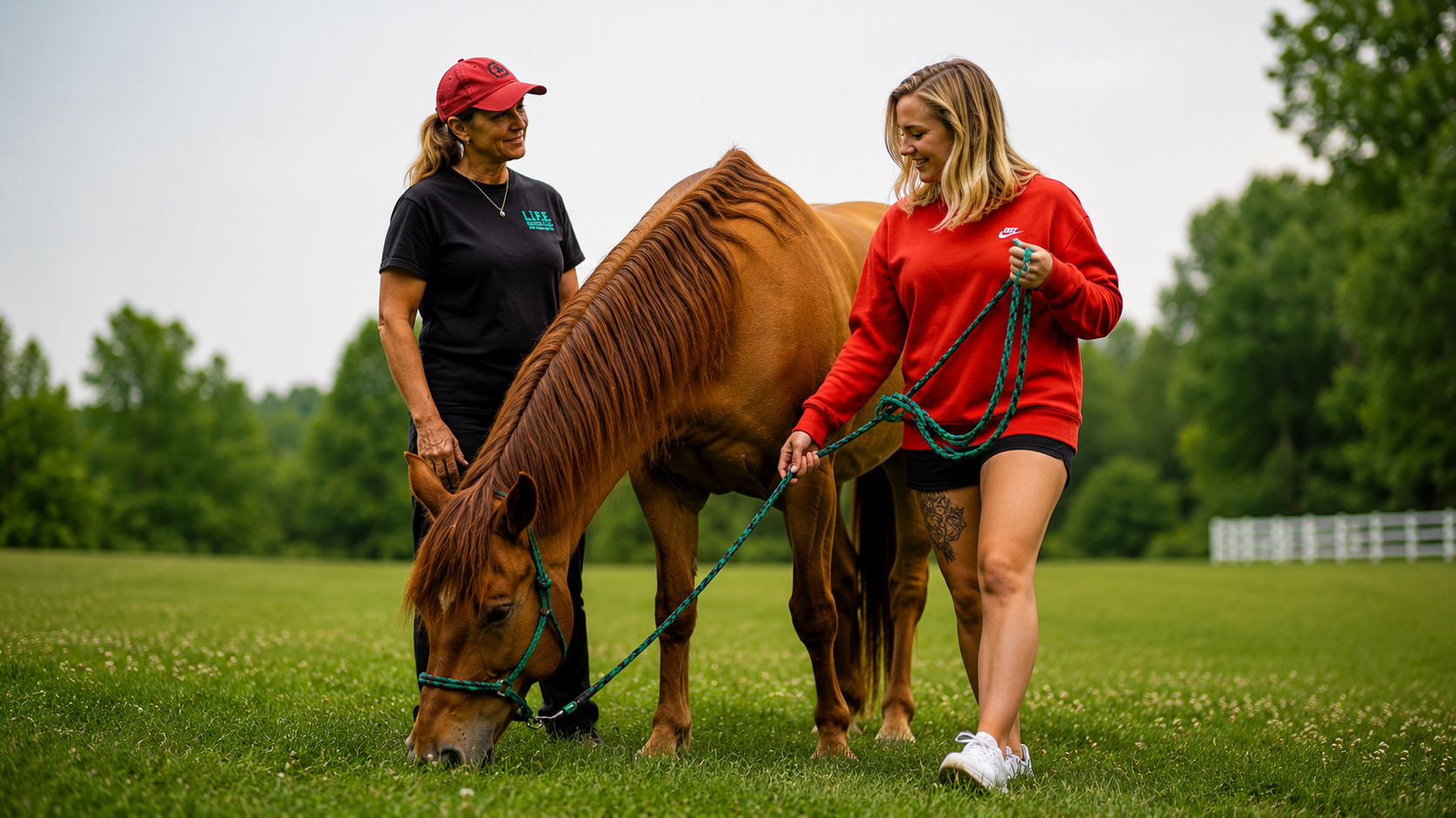
Equine therapy uses guided interaction with horses to help clients notice patterns that can be hard to see in a traditional office setting. The work may involve grooming, leading, observing, or completing structured activities with a horse while a trained professional helps connect the experience to recovery goals. At Arista Recovery, equine therapy may support addiction treatment, mental health care, or dual diagnosis work when it fits the individual plan.
Horses respond to posture, tone, pace, and consistency. That can make the experience useful for people who are practicing patience, boundaries, emotional regulation, and trust. Equine therapy is not a cure for addiction or a mental health condition, and it is not a substitute for clinical therapy, detox, or psychiatric support when those are needed. It is best understood as a supportive therapy that may be used alongside a broader treatment plan.




Equine Therapy
Equine Therapy at a Glance
- Therapy type: Experiential, animal-assisted, and activity-based support that may be used alongside clinical care.
- May support: Emotional awareness, communication, self-confidence, responsibility, grounding, and trust-building.
- Session format: Activities may be individual, group-based, or reflective depending on the program and clinical goals.
- Clinical role: A care team decides whether equine work fits the client, symptoms, safety needs, and level of care.
- Availability: Equine therapy may vary by location, staffing, weather, program schedule, and treatment plan.
- Important boundary: Research is growing, but equine therapy should be framed as complementary rather than a guaranteed treatment outcome.
Equine therapy is not horseback riding for recreation. In treatment, the focus is on therapeutic interaction, reflection, and skill-building. A session may involve standing near a horse, noticing body language, grooming, walking beside the animal, setting boundaries, or completing a task that requires calm communication. The goal is not to become an expert with horses. The goal is to use the activity as a mirror for patterns that show up in recovery.
Equine-assisted services are an umbrella term for services in which professionals incorporate horses to support clients, including therapeutic interventions, learning activities, and other structured horse-related experiences. A peer-reviewed review of equine-assisted services for individuals with substance use disorders describes several ways horses may be incorporated into structured therapeutic services and emphasizes the importance of trained professionals and clearly defined treatment goals. In a treatment setting, equine work should be facilitated by qualified professionals and connected back to the client’s plan.
This modality often overlaps with experiential therapy because clients learn by doing rather than only by talking. A horse may step away when a person approaches too quickly, relax when the person slows down, or respond to a clearer signal. These moments can open discussion about anxiety, control, avoidance, anger, or fear without forcing someone to begin with a long verbal explanation.
Why Equine Therapy May Support Recovery
Addiction and mental health symptoms can disrupt a person’s ability to notice what they feel before reacting. Equine therapy can slow that process down. When someone works with a large animal, they often have to pay attention to breathing, posture, tone, frustration, hesitation, and follow-through. Those details can become part of the clinical conversation: What changed when anxiety rose? What helped the horse feel safe? What made communication clearer?
Research on equine-assisted services for substance use disorders is still developing, but available studies suggest potential benefits related to emotional regulation, self-efficacy, self-esteem, and treatment engagement. A randomized study of equine-assisted therapy for people with substance use disorders reported improvements in several psychosocial outcomes. However, these findings should be considered within the broader and still developing evidence base.
Equine therapy may help clients practice skills such as trust, patience, assertiveness, and self-awareness, but it should not be viewed as a stand-alone treatment for substance use or mental health conditions. Instead, it may complement clinical services such as trauma therapy, relapse prevention, family therapy, or group therapy as part of an individualized treatment plan.



What an Equine Therapy Session May Look Like
A session may begin with a check-in about mood, safety, and goals. The therapist or facilitator may introduce the activity and explain how to interact with the horse safely. Some clients may start by observing from a distance. Others may groom, lead, or work through a task that requires cooperation. The activity is usually followed by discussion about what the client noticed in the horse and in themselves.
Equine therapy can bring up emotions quickly, especially for people who feel uncomfortable with closeness, authority, unpredictability, or mistakes. A client may feel proud after gaining a horse’s cooperation, embarrassed when an activity does not go as planned, or anxious about being near such a powerful animal. Those reactions can become useful material for recovery work when handled carefully and without judgment.
Some sessions may connect directly to skills used in group therapy. A client might practice asking for help, setting a limit, listening to feedback, or naming what they felt during an activity. The focus is not performance. It is the connection between the experience and everyday recovery challenges.
Equine therapy often pairs well with other approaches, but each modality serves a different purpose. CBT may help clients identify relapse-related thoughts. DBT may support distress tolerance and emotional regulation. Trauma therapy may address experiences that shape fear, avoidance, or mistrust. Experiential approaches help clients practice recovery skills in the moment.
Because animal-assisted work is complementary, it should be integrated with evidence-informed care rather than used as the only intervention. The NAMI overview of complementary health approaches offers a helpful reminder that complementary therapies are safest when they support, rather than replace, appropriate clinical care.
At Arista Recovery, equine therapy may be part of a larger plan that includes assessment, individual therapy, group work, relapse prevention, family support, and step-down planning. For clients in inpatient addiction treatment, equine work can give the treatment team a practical way to reinforce skills that are discussed in therapy.
Clients receiving inpatient mental health treatment may also benefit from structured activities when the care team believes hands-on work supports stabilization, confidence, or emotional regulation. A recent review on
Who May Benefit From Equine Therapy
Equine therapy may be helpful for clients who struggle to describe emotions, distrust others, shut down during talk-based sessions, or learn better through movement and experience. It may also support people working on trauma-related responses, low confidence, difficulty with boundaries, irritability, isolation, or shame after relapse.
A PLOS One study on equine-facilitated psychotherapy and substance use disorder explored health and quality-of-life outcomes among people in treatment. These findings should be understood as part of a broader research base, not proof that equine therapy is right for everyone. Clinical fit depends on safety, allergies, phobias, physical limitations, emotional readiness, and program availability.
Equine work may not be appropriate when a person is medically unstable, intoxicated, in severe withdrawal, actively psychotic, unable to follow safety instructions, or in immediate crisis. In those situations, medical stabilization, detox, or a higher level of care must come first.
Where Equine Therapy May Be Offered
Equine therapy availability can vary across Arista Recovery programs. The Paola inpatient rehab center may be one setting where experiential therapies can be incorporated into a structured residential plan. Admissions can help confirm whether equine therapy is currently available and whether it fits the recommended level of care.
If equine therapy is not available or is not clinically appropriate, the care team may recommend other experiential or skills-based services. The right plan depends on the client’s goals, symptoms, substance use history, physical safety, and medical needs.
It is also important to connect each activity back to life outside treatment. If a client learned that slowing down changed the way a horse responded, the next step may be to discuss how slowing down could help during conflict, cravings, or family conversations. If frustration showed up during an activity, the therapist may help the client name it, tolerate it, and choose a different response. That reflection keeps equine therapy tied to recovery rather than letting it become a pleasant break from treatment.
Before adding equine therapy to a plan, the clinical team should consider comfort around animals, physical safety, trauma responses, allergies, current mental status, and the client’s ability to follow instructions in an outdoor or barn-like setting. A client who feels nervous around horses may still be able to participate gradually, but fear should not be dismissed. The pace of the work matters because the goal is therapeutic engagement, not exposure for its own sake.
Equine Therapy
Equine Therapy at Arista Recovery
Ask Whether Equine Therapy Fits Your Plan
Equine therapy may offer a grounded way to practice trust, boundaries, and emotional awareness during recovery. To learn whether it may be part of care at Arista Recovery, contact admissions for a confidential conversation about symptoms, substance use history, safety needs, program availability, and insurance verification.
OUR LOCATIONS
Visit One of Our Trusted Locations
Access expert care and compassionate support at our accredited recovery centers across the Midwest. Each location offers a safe, welcoming space where lasting healing and growth begin.






Inside Our Detox Program
See How Healing Begins
“Arista’s newest location is a true pillar of the Paola community. The workers care deeply about their patients and are providing so many people with new beginnings. It's amazing to see the progress in people’s recovery journeys.”

“A few people in my AA group went to Arista Recovery and they only had nice things to say about it. When I went through a short relapse I followed their advice and went there to get my head straight, and I’m so glad I did. Getting help at Arista is what stopped my mistake from defining my life again.

“Going to Arista Recovery was the best decision I’ve ever made. The counselors helped me grow in my recovery journey, from someone who was shy and uncomfortable sharing my feelings to a leader in meetings who now understands the reasons for my struggles and how to move past them.”

OUR APPROACH
Our Unique Therapies
Explore our innovative approach to addiction treatment at Arista Recovery. From evidence-based therapies to holistic and experiential methods, we offer an immersive experience that works to treat the root causes of substance abuse.
.webp)


FAQs
Equine Therapy FAQs
No. Equine therapy does not require riding experience or horse-handling skills. Activities are typically adjusted to comfort level, safety needs, and treatment goals.
Equine-assisted services have a growing research base, including studies involving substance use treatment. The evidence is not as established as CBT, DBT, or medication-assisted treatment, so it should be described as supportive and complementary.
No. Participation depends on clinical fit, availability, safety, location, staffing, and the treatment plan.
It may support grounding, trust, and emotional awareness, but trauma-specific symptoms should be addressed through trauma-informed clinical care.
Coverage depends on the plan, level of care, medical necessity, and how the service is billed within treatment. Admissions can review benefits and explain what may apply.