.webp)


Key Takeaways
- Integrated care means one team treats substance use and mental health conditions together in the same place, an approach SAMHSA links to reduced substance use and better psychiatric outcomes 4.
- Rural Miami County faces documented provider shortages and longer travel for behavioral health, so a single campus that houses detox, therapy, and psychiatry closes a real access gap 1.
- Safe medical detox usually comes first for opioids, with around-the-clock monitoring and medication-assisted treatment serving as the entry point rather than the finish line 10.
- Recovery follows a continuum from detox through residential, PHP, IOP, outpatient, and sober living, and outcomes improve when people stay engaged across those steps rather than stopping after detox 8.
If You're Reading This in the Middle of a Hard Night
If you're reading this at 2 a.m. with a phone in one hand and a knot in your chest, that took something. Maybe you're the one who can't stop thinking about the next dose. Maybe you're a parent listening for footsteps in the hallway, or a spouse who just found something you wish you hadn't. Either way, you opened a tab and started looking. That counts.
You don't need a lecture right now. You need to know that what you're feeling — the fear, the exhaustion, the part of you that keeps hoping this might be the night something changes — makes sense. Opioid withdrawal is frightening. Watching someone you love disappear into it is its own kind of pain. Neither one is something you're supposed to figure out alone.
Here's what this page will do. It will walk you through what good mental health care actually looks like in Paola and the rest of Miami County — not as a brochure, but as a plain-language guide. You'll learn why safe medical detox usually comes first when opioids are involved, what integrated care for substance use and mental health really means, and how Arista Recovery's 38-acre Paola campus fits into that picture.
Take it one paragraph at a time. You don't have to decide anything yet. You're just gathering information, and that is already a step forward.
What "Best" Actually Means for Mental Health Care in Miami County
The Rural Kansas Reality Behind the Search
When you type "best mental health care" into a search bar from a house in Paola, you're not really asking the same question someone in Kansas City is asking. You're asking it from a place where the nearest hospital might be twenty minutes away, where the primary care clinic has a six-week waitlist for behavioral health, and where the people you grew up with may not talk about this kind of thing out loud.
That context matters. SAMHSA has been blunt about it: rural communities face provider shortages, longer drives, and higher concentrations of certain risk factors than their urban neighbors, which is why federal programs now exist specifically to expand evidence-based care and integrated services in places like Miami County 1. The shortage isn't your imagination. It's a documented gap.
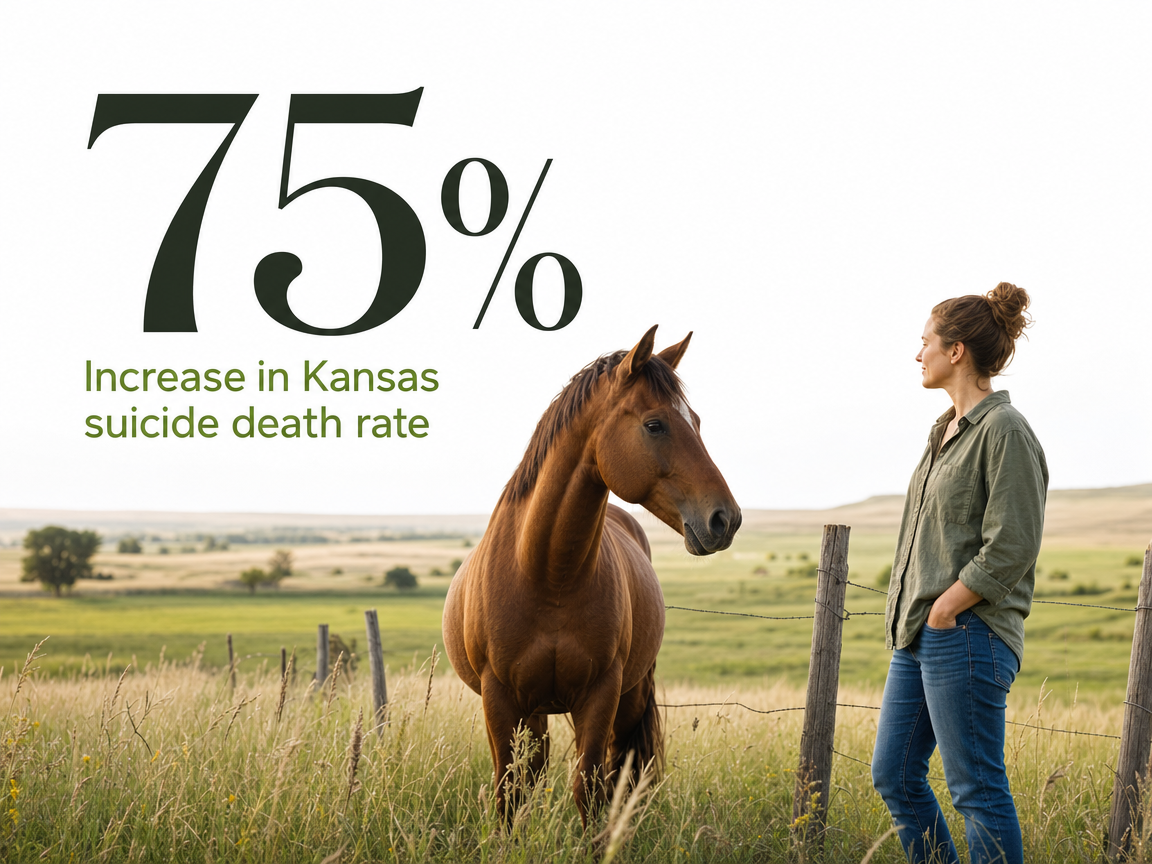
The stakes here are real. The Kansas Department of Health and Environment has reported that the state's suicide death rate climbed by roughly 75% over the period the agency studied, a trend that has pushed Kansas to lean harder on prevention and crisis response programs 2. Mental illness itself is far from rare — NIMH estimates that about 23.1% of U.S. adults, roughly 59.3 million people, were living with a mental illness in 2022 3. If you've been carrying the feeling that something is wrong and you're the only one, you are not.
So when you ask what "best" means in Paola, the honest answer starts here: a program that takes the rural piece seriously, doesn't make you drive three counties for every appointment, and treats the whole picture instead of one sliver of it.
Why "Integrated" Is the Word That Matters Most
If you remember one word from this page, make it integrated. It's the difference between a treatment plan that holds together and one that sends you to four different offices hoping somebody connects the dots.
Here's what integrated care means in plain terms. A person living with opioid use disorder very often is also living with depression, anxiety, PTSD, or another mental health condition — sometimes the substance use came first, sometimes the mental health piece did, and sometimes they grew up together. SAMHSA's guidance is clear that treating both at the same time, in the same place, with one team that talks to itself, is what tends to reduce substance use and lift psychiatric symptoms and quality of life 4. Treating one and ignoring the other is like fixing a flat tire without checking the brakes.
The research backs this up in measurable ways. A peer-reviewed comparison of integrated versus non-integrated care for people with co-occurring substance use and severe mental disorders found that
integrated treatment "held an advantage over non-integrated treatment in significantly improving psychiatric symptomatology"
6.
What does that look like on the ground? A psychiatrist who can adjust your medication while a therapist works with you on trauma. A counselor who knows you're on buprenorphine and isn't scared of it. A treatment plan that doesn't ask you to choose between getting sober and getting your depression treated, because the team handling one is the team handling the other.
This is the standard you should hold out for in Paola — not as a bonus feature, but as the floor. Arista Recovery's Paola campus is built around this premise: dual diagnosis isn't an add-on service, it's the default expectation. If a program tells you they only treat the substance use piece and you can find a psychiatrist elsewhere, that's a sign to keep looking.
Starting Where Most People Start: Safe Detox and Medication Support
When opioids are part of the picture, the first question isn't which therapy works best. It's whether the next 72 hours will be safe. That's the honest place to begin.
Opioid withdrawal can include vomiting, diarrhea, muscle pain, racing heart, and a kind of psychological agony that makes the idea of using again feel like the only relief in the world. Trying to white-knuckle that at home, especially without anyone to monitor vitals or treat dehydration, is how a lot of people end up using again within days — not because they lack willpower, but because the body's alarm system overwhelms the plan. Medical detox exists so that doesn't have to be how this goes.
At a medically supervised detox, a clinical team monitors you around the clock and uses medications to take the edge off withdrawal. For opioid use disorder, that often means medication-assisted treatment with buprenorphine, methadone, or naltrexone depending on the situation. This isn't trading one substance for another. NIDA's research-based guide is direct about it: effective treatment for substance use disorders integrates medications with behavioral therapies, and most people need at least three months of treatment to significantly reduce or stop substance use 10. Detox is the entry point, not the finish line.
At Arista Recovery's Paola campus, detox and MAT happen on the same property where residential care continues. You don't get stabilized in one town, discharged with a list of phone numbers, and told good luck. The psychiatrist who starts your medication is part of the same team that will keep adjusting it as your body finds its footing. That kind of handoff — or rather, the absence of a handoff — is one of the quiet reasons people stay in treatment long enough for it to work 4.
If you made it through one day already, that counts. The next call is the harder one, and it's also the one that changes the trajectory.
The Continuum of Care, in Plain Language
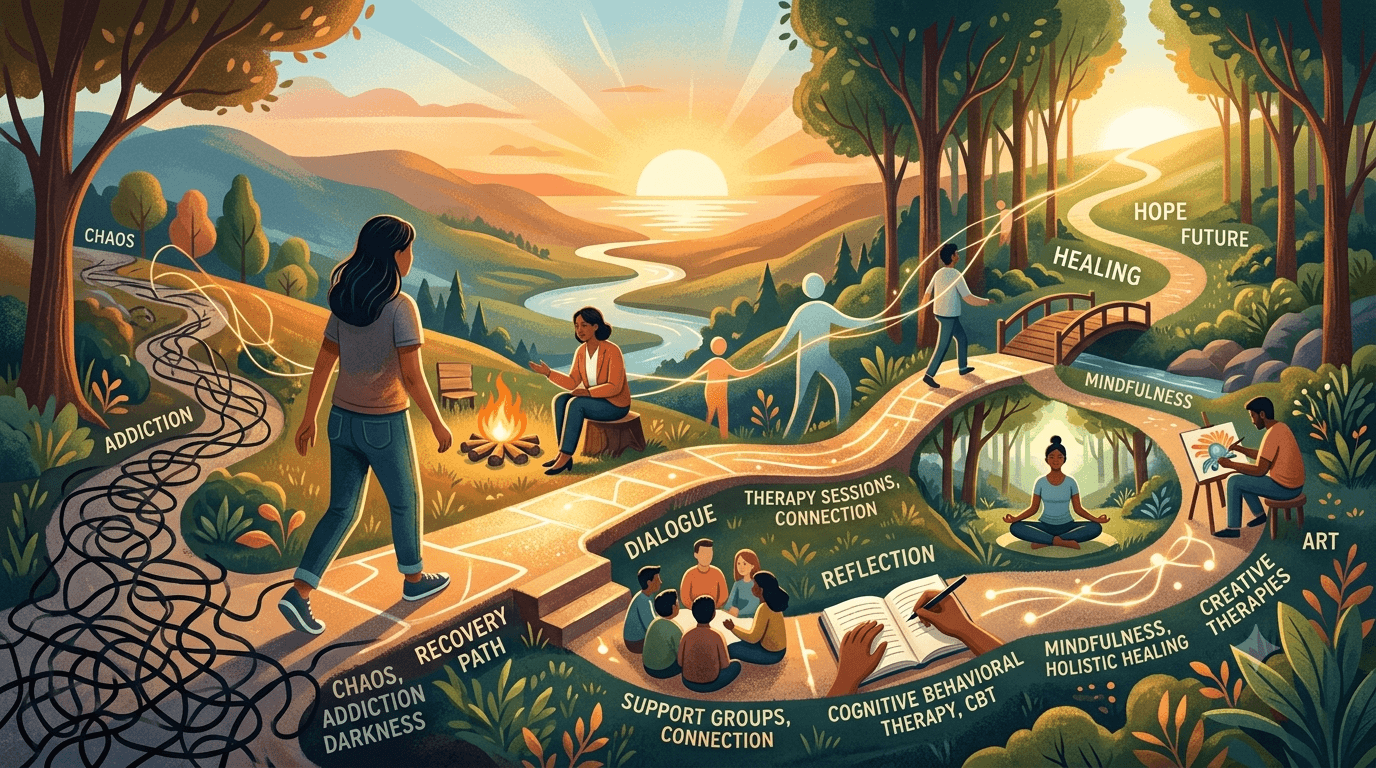
Recovery is rarely one room. It's a sequence of rooms, and each one is designed for a different version of you — the one barely sleeping through withdrawal, the one starting to feel hungry again, the one who can finally hold a conversation without flinching. The shorthand for that sequence is the continuum of care, and it's worth understanding because the right room at the right time is most of the work.
Here's the ladder, top to bottom, in plain language:
Medical detox is the first 3 to 7 days for most people coming off opioids. Around-the-clock nursing, medication to manage withdrawal, and a quiet place to sleep when your body finally lets you.
Residential inpatient is what comes next on the Paola campus — typically a few weeks of living on-site, eating regular meals, attending group and individual therapy, and not having to think about rent, kids' lunches, or whether the dealer is going to text.
Partial hospitalization (PHP) is a step down. You're still in treatment most of the day, five or six days a week, but you may sleep in housing nearby instead of on the unit. The structure stays high; the leash gets longer.
Intensive outpatient (IOP) usually runs 9 to 15 hours a week across several days. You're living at home or in sober living and going to work or school around your sessions. The research here is clearer than people realize: well-structured IOPs can be as effective as inpatient treatment for many people with substance use disorders 9.
Outpatient is weekly or biweekly therapy and medication management. You're carrying most of the day yourself, with a clinical team in the background.
Sober living is a recovery-supportive home — peers in the same fight, basic accountability, no substances in the house — where you can keep your footing while life ramps back up.
Two principles tie the ladder together. First, NIDA's research-based guide is clear that most people need at least three months in treatment to significantly reduce or stop substance use, and that no single level fits everyone 10. Second, the best outcomes show up in people who stay engaged in continuing care — stepping down through the levels rather than stopping cold after detox 8. The 2025 systematic review of SUD outcomes echoes the same theme: retention and continuity track closely with quality of life and lower relapse rates 12.
You don't need to memorize the ladder. The intake team on the Paola campus places you where you actually are today, then moves you when your body and mind are ready — not when the calendar says so. If detox feels like the only step you can picture right now, that's enough. The next rung gets built while you sleep.
What Therapy Looks Like on a 38-Acre Campus
Trauma-Informed Care as a Standard, Not a Slogan
Trauma-informed care gets printed on a lot of brochures. What it actually means in a treatment room is narrower and more useful: the team assumes that the person in front of them has likely lived through something hard, and they design every interaction — from the intake paperwork to how a door closes behind you — around not adding to that load.
The research on this is encouraging. A 2024 review of trauma-informed care implementation across health and behavioral health settings found that TIC can improve well-being and engagement for people with trauma histories, and that it tends to lift staff wellness and collaboration too 7. That second part matters more than it sounds. Burned-out clinicians don't deliver gentle care. A team that takes care of itself tends to take better care of you.
On the Paola campus, this shows up in small, specific ways. Group rooms have soft lighting and exits you can see. Staff explain what's about to happen before they do it — including blood draws during detox. Nobody is going to demand that you tell your whole story on day one. You share what you're ready to share, and the rest waits.
If past providers have made you feel like a case number, that wasn't your fault and it isn't a sign that treatment doesn't work. It's a sign that the wrong setting can re-injure people. A different setting can do the opposite.
Equine, Horticultural, Art, and Sand Tray Work
Talk therapy is the backbone, but it isn't the only language the nervous system speaks. Some of what addiction and trauma do to a person sits below words, in the body and the senses. That's where experiential therapies come in — and it's where the 38-acre Paola campus stops being a detail and starts being part of the treatment.
In testimony submitted to the Kansas Legislature, Arista Recovery's programming was described as including horticultural therapy as a form of addiction therapy that uses plants to improve mental health, alongside art therapy used to support cognitive and emotional functioning 17. On the ground, that looks like raised garden beds where you learn to tend something that will outlast the week, and an art room where you can put on paper what you haven't been able to say out loud.
Equine therapy uses horses for a reason that becomes obvious the first time you stand next to one. A 1,200-pound animal does not respond to performance. It reads your breathing, your posture, your nervous system. People who have spent years hiding how they feel often find that a horse calls the bluff in about ninety seconds — gently, without judgment, and in a way that opens a conversation a clinician can then carry forward.
Sand tray work is quieter. You arrange small figures in a tray of sand to build a scene. For people who freeze when asked direct questions about childhood or grief, the tray gives the story somewhere to go. The therapist watches, asks, and helps you make sense of what showed up.
None of this replaces medication management or CBT. It sits alongside them. And on a campus with pasture, gardens, and modern interior spaces, the setting is part of the medicine.
For the Person Calling on Someone Else's Behalf
If you're the one making the calls — the mother pacing the kitchen, the husband who hasn't slept right in weeks, the sibling who finally decided this is the day — this part is for you. You didn't cause this, and you can't white-knuckle someone else into recovery. But what you do in the next few days matters more than you've probably been told.
A few things help more than they should. Ask about family programming when you call the Paola campus, because it exists for a reason. Bring a written list of medications, prior diagnoses, recent ER visits, and insurance cards if you can find them — intake moves faster when someone in the room has the paperwork. If your person is willing to come but not willing to drive, say so. Same-day admission and transportation logistics are part of what an intake coordinator handles, not something you have to solve alone.
Use person-first language when you talk about them, even when you're tired. Researchers studying opioid use disorder have made the case that calling someone a "person with opioid use disorder" rather than an "addict" measurably shifts how providers and families respond, and it lowers the wall of stigma your loved one is already climbing 16. Words you use at the kitchen table travel into the treatment room.
One more thing. Take care of yourself this week. Eat something. Tell one friend. The version of you that shows up to family sessions in month two needs to still be standing.
How Admission Actually Works at the Paola Campus
The fear before the first call is usually worse than the call itself. People picture a long form, a stranger asking judgmental questions, a wait list. What actually happens is closer to a conversation.
When you reach the Paola campus, an intake coordinator picks up — day, night, weekend, holiday. The first questions are practical: where are you right now, are you safe, what are you using and when did you last use, and is there anyone with you. Nobody is going to ask you to justify how you got here. Same-day admissions are common, especially when opioids are involved and detox needs to start now rather than next Tuesday.
The clinical screen comes next. A nurse or counselor asks about medical history, current medications, prior diagnoses, any recent ER visits or overdoses, and what mental health symptoms have been showing up alongside the substance use. This is the moment integrated care starts — the team is already mapping both pictures at once so dual diagnosis treatment can begin on day one, not week three 4. If transportation is the wall in the way, say so. The campus partners with services that can help bridge that gap.
Insurance verification happens in the background while clinical decisions move forward. Most major plans across Kansas, Ohio, Missouri, and Oklahoma are in-network. You don't need to have the answers before you call. You just need to call.
What Recovery Looks Like After the First 90 Days
The first 90 days tend to get the most attention because they're the hardest to picture. What comes after gets less airtime, but it's where most of the real life happens — and it's worth knowing what you're walking toward.
Recovery at the three-month mark usually looks like a quieter version of yourself. The acute fog of withdrawal is behind you. Medication, if you're on it, has settled into a steady rhythm. Sleep is showing up most nights. The triggers haven't disappeared, but you've learned to spot them earlier — the hour of the day, the song on the radio, the argument that used to send you straight to the car. That recognition is a skill, not luck, and it was built in group rooms and one-on-one sessions you may not have wanted to attend at the time.
From here, the work shifts. Outpatient sessions space out. A peer support worker — someone who has walked this road and stayed on it — may become one of the steadiest voices in your week 15. Family sessions continue if that's part of your plan, because the people around you are still adjusting too 11. If driving to the Paola campus gets harder as life ramps back up, telehealth check-ins can fill the gap; the research on telemental health in rural areas shows it can meaningfully improve symptoms and access for people exactly where you live 13.
The 2025 systematic review of substance use disorder outcomes is worth holding onto here: retention, continuity of care, and individualized planning track closely with quality of life and lower relapse rates over time 12. Translation — staying connected to some level of care, even a light one, is part of how people stay well. Recovery isn't a graduation. It's a relationship you keep tending.
If you make it to month four, then month six, then a year, those aren't small things. Each one is a stretch of mornings you chose to keep going. That deserves to be named.
Frequently Asked Questions
What makes mental health care in Paola different from a larger city?
Rural communities like Paola face documented provider shortages, longer drives, and fewer behavioral health options than urban areas, which is why federal programs now target rural behavioral health specifically 1. The difference isn't quality of care — it's access. A strong local program closes that gap by keeping detox, therapy, psychiatry, and step-down care on one campus instead of scattered across counties.
Can Arista Recovery treat both substance use and mental health conditions at the same time?
Yes. The Paola campus is built around integrated dual diagnosis treatment, which SAMHSA recommends because addressing both conditions together is associated with reduced substance use and improved psychiatric symptoms 4. Peer-reviewed research found integrated care held a clear advantage over non-integrated care in improving psychiatric symptoms for people with co-occurring disorders 6. One team, one plan, both conditions.
How quickly can someone in crisis get admitted to the Paola campus?
Often the same day. The intake line is staffed around the clock, and same-day admissions are common when opioids are involved and detox can't wait. The first call covers a brief safety check, current substance use, and basic medical history. Insurance verification happens in the background while clinical decisions move forward. If transportation is the barrier, say so — the team can help arrange it.
What levels of care are available, and how do you know which one fits?
The continuum runs from medical detox to residential inpatient, partial hospitalization, intensive outpatient, outpatient, and sober living. The intake team places you based on what your body and mind need right now, then steps you down as you stabilize. Research shows the best outcomes come from people who stay engaged across that continuum rather than stopping after detox 8. You don't have to pick the level yourself.
How can family members help a loved one who is struggling with opioid use?
Stay connected, hold steady boundaries, and ask about family programming when you call. Family involvement across treatment and recovery is associated with better outcomes for the person in treatment and for the family itself 11. Use person-first language at home — "person with opioid use disorder" rather than "addict" — because research shows that word choice measurably lowers stigma and shapes how care unfolds 16.
Is treatment covered by insurance?
Most major insurance plans across Kansas, Ohio, Missouri, and Oklahoma are in-network with Arista Recovery. You don't need to have your benefits figured out before you call — the intake team verifies coverage while clinical screening moves forward, so detox and stabilization aren't waiting on paperwork. If you can find your insurance card before calling, that speeds things along, but it isn't required to start the conversation.
References
- Rural Behavioral Health. https://www.samhsa.gov/communities/rural-behavioral-health
- Kansas Suicide Data and Statistics. https://www.kdhe.ks.gov/DocumentCenter/View/15947/2021-Kansas-Data-and-Statistics-Presentation-PDF
- Mental Illness. https://www.nimh.nih.gov/health/statistics/mental-illness
- Managing Life with Co-Occurring Disorders. https://www.samhsa.gov/mental-health/serious-mental-illness/co-occurring-disorders
- The effectiveness of integrated treatment in patients with substance use disorders co-occurring with severe mental disorders. https://pmc.ncbi.nlm.nih.gov/articles/PMC3974008/
- Integrated vs non-integrated treatment outcomes in dual diagnosis. https://pmc.ncbi.nlm.nih.gov/articles/PMC10157410/
- Effectiveness of Trauma-Informed Care Implementation in Health and Behavioral Health Settings. https://pmc.ncbi.nlm.nih.gov/articles/PMC10940237/
- Chapter 3. Intensive Outpatient Treatment and the Continuum of Care. https://www.ncbi.nlm.nih.gov/books/NBK64088/
- Substance Abuse Intensive Outpatient Programs: Assessing the Evidence. https://pmc.ncbi.nlm.nih.gov/articles/PMC4152944/
- Principles of Drug Addiction Treatment: A Research-Based Guide (Third Edition). https://nida.nih.gov/sites/default/files/podat-3rdEd-508.pdf
- Family Involvement in Treatment and Recovery for Substance Use Disorders: A Narrative Review and Conceptual Framework. https://pmc.ncbi.nlm.nih.gov/articles/PMC8380649/
- Substance Use Disorder Treatment Outcomes: A Systematic Review of Recent Studies. https://pmc.ncbi.nlm.nih.gov/articles/PMC12180564/
- Telemental health in rural areas: a systematic review. https://pmc.ncbi.nlm.nih.gov/articles/PMC10079469/
- Certified Community Behavioral Health Clinics (CCBHCs). https://www.samhsa.gov/communities/certified-community-behavioral-health-clinics
- Peer Support Workers for Those in Recovery. https://www.samhsa.gov/substance-use/recovery/peer-support-workers
- The use of person-centered language in scientific research articles on opioid use disorder. https://pmc.ncbi.nlm.nih.gov/articles/PMC12067749/
- Arista Recovery at Kansas. https://www.kslegislature.gov/li_2022/b2021_22/committees/ctte_jt_cjjo_1/documents/testimony/20221128_33.pdf
- FastStats - Mental Health. https://www.cdc.gov/nchs/fastats/mental-health.htm
- Mental Health Conditions & Care. https://www.cdc.gov/mental-health/about-data/conditions-care.html
- 2023 Data on Substance Use and Mental Health Treatment Facilities. https://www.samhsa.gov/data/report/2023-n-sumhss-annual-report
- Behavioral Health Barometer: Kansas, Volume 6. https://www.samhsa.gov/data/sites/default/files/reports/rpt32833/Kansas-BH-Barometer_Volume6.pdf