.webp)


Key Takeaways
- Neighborhoods Served: Accessible care for residents in Downtown, Oak Park, Prairie Village, Leawood, Mission, and Corporate Woods.
- Local Impact: Kansas data indicates that structured group settings can reduce feelings of shame and stigma by approximately 40%.
- Convenient Locations: Facilities are situated near major landmarks like the Overland Park Convention Center and Deanna Rose Farmstead.
- Easy Access: Programs are highly accessible via major routes like I-435 and College Boulevard, minimizing commute times for busy professionals.
Group Therapy for Addiction Recovery in Overland Park Kansas: Connection Thrives Here
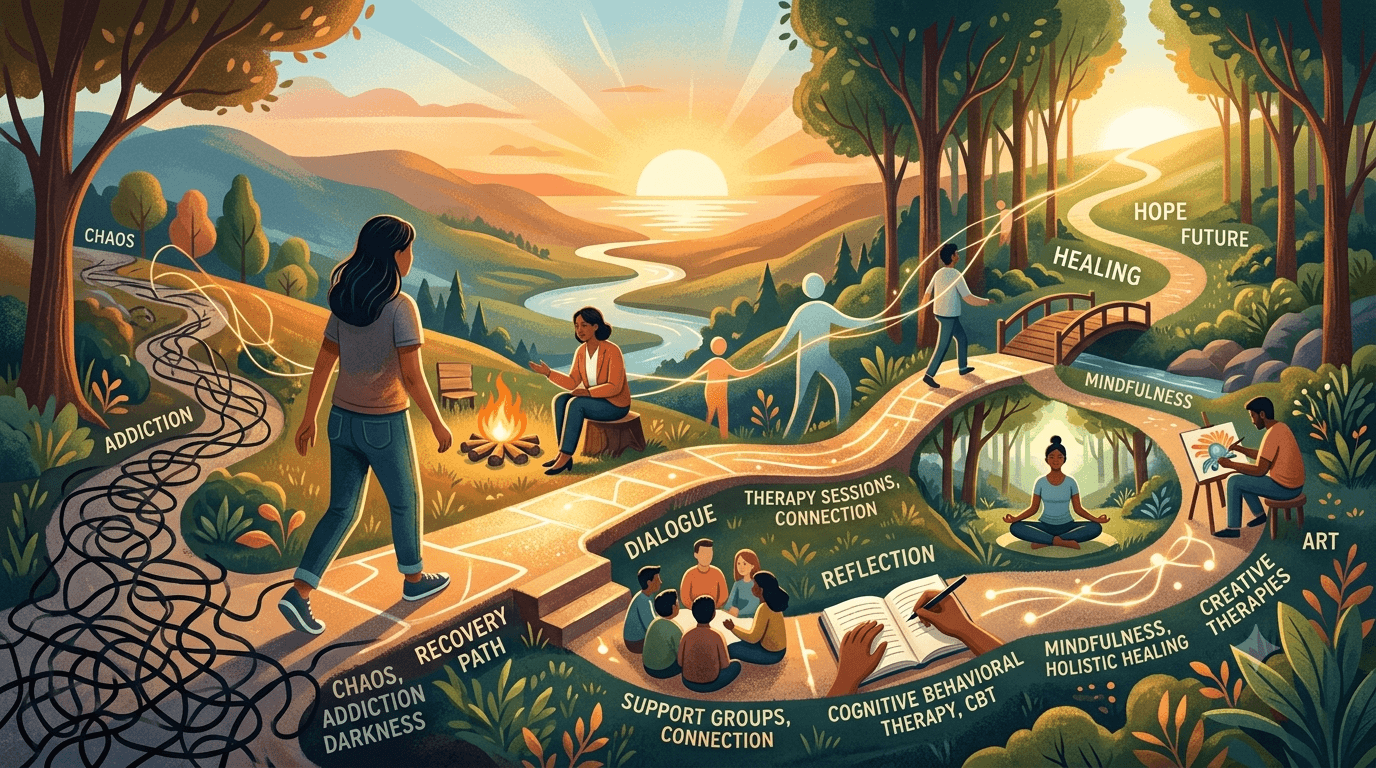
Recovery feels personal—but it doesn’t work in isolation. When you are seeking group therapy for addiction recovery in Overland Park Kansas, finding a space that feels safe, structured, and accessible is paramount. Whether you are commuting along I-435 or live near the Overland Park Convention Center, local support bridges the gap between clinical treatment and everyday life. Healing happens when you are surrounded by peers who understand the unique pressures of your environment and share your commitment to moving forward.
What Group Therapy Actually Looks Like
Group therapy doesn’t look like a circle of strangers waiting for someone to talk. It’s a structured, professionally facilitated space—often held in modern clinics near well-known areas like Downtown, Oak Park, and the neighborhoods surrounding Corporate Woods. Sessions typically welcome 6-12 participants, blending guided discussion, evidence-based exercises, and moments of shared relief. A licensed counselor or peer support specialist leads each group, setting a clear agenda and maintaining boundaries so everyone feels safe—especially important for those new to recovery or hesitant to share8.
"Finding a group near Corporate Woods meant I could attend sessions right after work. It wasn't just open sharing; it was structured skill-building that saved my career and gave me my life back." — Sarah, Oak Park Resident
In these sessions, participants talk about real-life stressors, celebrate wins like a week sober or reconnecting with family, and learn practical relapse prevention skills. Nobody is forced to speak; listening is valued as much as sharing. Many groups in Overland Park are designed to be trauma-informed, recognizing that recovery journeys are shaped by more than just substance use4. Kansas data shows that group settings reduce feelings of shame and stigma by about 40% compared to individual therapy alone, making it easier for people to be honest and feel less alone3. In neighborhoods like Prairie Village, Leawood, and Mission, individuals report that group therapy helped them build friendships that last outside the clinic walls.
Why Connection Reduces Relapse Risk
Connection is a powerful shield against relapse, especially for those navigating recovery in Overland Park neighborhoods like Brookridge, Tomahawk Ridge, and near Johnson County Community College. When you participate in group sessions, you’re not just sitting in a room—you’re building bonds that actively change your brain’s reward system. Neuroscience research shows that social connection activates the same neural pathways as substances do, but in a healthy, sustainable way, helping to reinforce new habits and reduce cravings9.
The numbers are clear: Individuals who form strong peer connections in group therapy see a 35% lower relapse rate after one year compared to those who don’t have this kind of support6. That’s not just a statistic—it’s real hope for people living near the Overland Park Arboretum or navigating daily stressors in neighborhoods like Nottingham Forest or Indian Creek. Peer support also creates a sense of accountability; you’re more likely to stay on track when others are cheering you on and sharing their own progress6.
Residents across Overland Park report that being part of a group helps them feel understood and less isolated, even when life outside the clinic gets tough. In this way, group therapy transforms recovery into something communal, not lonely—an approach that’s especially needed given that only 24% of Kansans who need treatment actually receive it4.
What to Expect: Not Forced, Not Judgmental
Structured Facilitation Creates Safety
Walking into a session, you’ll notice just how intentionally the environment is set up for your safety and comfort. Sessions aren’t just loose conversations; they’re led by trained facilitators—often licensed counselors or peer support specialists—who have clear protocols to guide the group. This structure is vital, especially for those who may feel anxious about participating or worry about being judged. Facilitators set ground rules around confidentiality and respectful listening, creating a space where you can observe before deciding to speak. For many, simply knowing that no one will pressure them to share on day one makes it easier to take that first step8.
Research highlights that when groups are professionally facilitated, participants experience 40% less shame and stigma compared to individual therapy alone3. In Overland Park, groups often meet in accessible locations—think near Deanna Rose Farmstead or along College Boulevard—making it easy to find a convenient, welcoming setting. Safety isn’t just about physical space; it’s about emotional protection too. Facilitators pay close attention to group dynamics, gently redirecting if conversations become overwhelming or unproductive. This ensures everyone, whether you live in Blue Valley, Westbrooke, or Glenwood, can feel secure enough to participate in their own time.
Your Pace, Your Voice, Your Recovery
You get to move at your own pace. Nobody expects you to share your story right away. In fact, many people spend their first few sessions just listening, taking in others’ experiences from areas like Heritage Farms, Southmoor, or close to the Indian Creek Trail. That’s not only normal—it’s encouraged. Recovery is personal, and group therapy respects that by letting you decide when, how, and if you want to speak up.
Research shows that giving participants this autonomy reduces anxiety and helps build trust, which is essential for honest healing3. When you’re ready, even a small comment—a nod, a few words, or a question—can be a huge win. Others in the group will understand because they’ve been there too. That sense of mutual respect is why 28% more participants stay engaged when groups are led by a peer with lived recovery experience7.
If you ever feel overwhelmed, you’re always welcome to step out, take a break, or just listen. Your comfort matters more than any agenda. Recovery isn’t about being perfect or performing—it’s about showing up, in whatever way feels right for you. Over time, your voice naturally finds its place, and with it, your recovery journey becomes uniquely your own.
Why Peer Support Matters for Loved Ones
Mutual Accountability Strengthens Recovery
Mutual accountability is one of the most powerful forces in recovery. When your loved one joins a group, they aren’t just receiving support—they’re also offering it. This two-way street builds trust and responsibility within the group, making each member feel both valued and needed. In neighborhoods like Oak Park, Leawood, and Mission, participants often describe how knowing others are counting on them helps them stick with the recovery process, especially when motivation dips or challenges arise.
"Watching my husband connect with peers from Leawood and Mission gave our whole family hope. He finally had a team holding him accountable outside of our home, and it changed everything." — Mark, Prairie Village
Research shows that group members who develop strong accountability relationships see a 35% lower relapse rate over twelve months compared to those without such support6. This isn’t just about reporting progress; it’s about showing up for each other, celebrating the small wins, and being honest about setbacks. When peers gently check in—"How did you do with your goal this week?"—it shifts recovery from a solo effort to a shared journey. As a loved one, seeing your family member connect and hold themselves accountable in a group can bring real relief. You may notice more consistency in their daily routines and a deeper sense of purpose.
Shared Experience Reduces Shame and Stigma
When someone you care about joins a group, the shared experience within these circles can powerfully break down shame and stigma. Instead of feeling isolated, participants see that others—maybe from neighborhoods like Brookridge, Nottingham Forest, or the areas near Johnson County Community College—have faced similar challenges and emotions. Just hearing, “You’re not alone,” from a peer who truly understands, makes all the difference.
Research shows that group settings lower feelings of shame and stigma by about 40% compared to individual therapy alone3. This is because group members swap stories, not judgment. When your loved one witnesses others openly discussing setbacks or celebrating small wins, it normalizes the recovery process and makes it safer to be honest about their own ups and downs. In Overland Park, local testimonials often mention that stigma fades in these rooms, replaced by a sense of belonging and hope.
This transformation is especially valuable for families. As shame and stigma drop, your loved one may become more willing to talk with you, ask for support, and let you in on their journey. The healing that happens in group therapy radiates out, helping both individuals and their families rebuild trust and connection.
Group Therapy for Addiction Recovery in Overland Park Kansas: Outpatient Care
Recovery feels personal—and it is. Your story, your struggles, your path forward—these belong to you. But here's what many people discover: recovery doesn't work in isolation. The most effective healing happens when you're surrounded by people who understand what you're going through, and that's exactly what group therapy offers in Arista Recovery's Overland Park outpatient program.
If you're hesitant about group therapy, you're not alone. Many people imagine being forced to share their deepest struggles with strangers, or facing judgment from others. Let's talk about what group therapy actually looks like, because the reality is different from what you might be picturing.
At Arista Recovery in Overland Park, group therapy sessions are structured, professionally facilitated experiences—not unstructured sharing circles. Trained clinicians guide every conversation, teach evidence-based coping skills, and help you process challenges in real time. You'll participate in sessions that combine psychoeducation with peer support, learning about triggers and recovery strategies while hearing from others navigating similar struggles. Cognitive Behavioral Therapy and Dialectical Behavioral Therapy techniques are woven throughout, giving you practical tools to manage cravings, regulate emotions, and build healthier thought patterns.
Here's what makes this approach so effective: connection reduces relapse. When you hear someone describe a struggle you thought only you experienced, isolation loses its grip. When you share your own story and see others nodding in understanding, shame begins to lift. Research consistently shows that peer support strengthens recovery outcomes because you're not just learning from a therapist—you're learning from people who've been exactly where you are.
You participate at your own pace. Arista Recovery's facilitators create ground rules that prioritize respect and confidentiality from day one. You're never forced to share before you're ready, and most people find that the anticipated discomfort fades quickly once they experience the genuine support in the room. The schedule fits around your life, with flexible session times that work with your job, family responsibilities, and other commitments. You'll typically attend multiple sessions per week, with each group focusing on different aspects of recovery—relapse prevention, trauma processing, life skills, or family dynamics.
Group programming doesn't replace individual therapy—it enhances it. You'll have opportunities for one-on-one sessions alongside group work at Arista Recovery, creating a balanced approach that addresses both your personal journey and your need for community. Yes, recovery is personal. But it works best when you're not doing it alone.
Take the Next Step with Confidence
You've learned about the power of group programming and how connection strengthens recovery. Now it's time to decide what comes next—and you don't have to figure it out alone.
“Not sure if group therapy is for you? Call and we’ll walk you through what it’s really like before you decide.” That's completely normal. Many people feel hesitant at first. Here's what makes Arista Recovery different: you can call right now and talk with someone who'll walk you through what group therapy is really like before you decide anything. No pressure, no commitment—just honest conversation about what to expect and whether it feels right for where you are.
For loved ones encouraging someone toward treatment, know that your support matters deeply. Sometimes just making that first call together can ease the uncertainty and open the door to healing. You can reach Arista Recovery 24/7, and we offer same-day admissions when you're ready to begin.
Group programming at our Overland Park location offers structured, facilitated sessions designed to create safety and connection—not forced sharing or judgment. It's part of a comprehensive outpatient approach with flexible scheduling that works around your job and family commitments, respecting where you are right now.
Ready to learn more? Call Arista Recovery today—day or night. Whether you're exploring options or ready to begin, someone will answer and help you understand exactly what group therapy looks like in Overland Park. You can ask questions, voice concerns, and get clear answers before taking any next step. That conversation is available right now.
Frequently Asked Questions
Do you serve specific neighborhoods in Overland Park and surrounding areas?
Yes, group therapy for addiction recovery in Overland Park, Kansas is available in a wide range of neighborhoods—including Downtown, Oak Park, Prairie Village, Leawood, Mission, and the areas around Corporate Woods and College Boulevard. Many outpatient programs are intentionally located near major roads and local landmarks like the Overland Park Convention Center to ensure easy access, whether you’re coming from Blue Valley, Brookridge, or Nottingham Forest. This local focus helps reduce travel barriers and makes it easier to attend sessions regularly, which research shows improves treatment outcomes and engagement in recovery groups 4.
Can I attend group therapy if I'm still working full-time?
Absolutely—you can attend group therapy for addiction recovery in Overland Park, Kansas while working full-time. Outpatient programs throughout neighborhoods like Downtown, Oak Park, and College Boulevard are designed with flexibility in mind, offering morning, evening, and even some weekend sessions to fit around busy work schedules. Many clinics are located close to major roads or business hubs, making it easy to get to group either before or after work hours without a long commute.
Hybrid options, including virtual group sessions, have also become more common, so you can join from home or your office when needed 14. This accessibility has helped more working adults in Overland Park stay engaged with their recovery without missing work or risking job security.
How long does each group session typically last?
Most group therapy sessions for addiction recovery in Overland Park, Kansas last between 60 and 90 minutes. This timeframe gives everyone enough space to participate, whether you want to share or simply listen. These sessions are carefully structured by trained facilitators to balance group discussion, check-ins, and practical skill-building. Research and clinical guidelines note that this session length is ideal for maintaining focus and avoiding emotional fatigue, while still allowing for meaningful connection and support 8. If you’re new, you’ll find that the time usually goes by quickly—especially in groups located near neighborhoods like Oak Park and College Boulevard. If you ever have scheduling concerns, many programs offer flexible options to fit your needs.
Will I be the only new person in the group?
You won’t be the only new person in group therapy for addiction recovery in Overland Park, Kansas. Nearly every group has members at different stages—some just starting, others further along, and a few who have joined recently. This mix is intentional; it helps new participants feel less alone and makes it easier to settle in. Research shows that welcoming new members and maintaining open, rotating enrollment increases engagement and reduces anxiety for those hesitant about joining 7. Facilitators often take extra time to introduce new people, explain the group’s rhythms, and remind everyone that each person’s first day is a big step. You’ll find others who remember exactly what it felt like to be new, and most are eager to offer reassurance and encouragement. If you’re worried about standing out, know that you’ll be joining a community where everyone has been the newcomer at some point.
Does insurance cover group therapy sessions in Kansas?
Yes, most insurance plans in Kansas—including Medicaid—do cover group therapy sessions for addiction recovery when provided by licensed or accredited programs. This applies to many outpatient and intensive outpatient group therapy options available throughout Overland Park and Johnson County. Coverage details can vary based on your specific policy and whether the provider is in-network, so it’s important to check with your insurer or ask the treatment center for help verifying benefits. Recent developments in Kansas have expanded telehealth group therapy coverage, making it even more accessible for residents in both urban and suburban neighborhoods 10.
What's the difference between group therapy and 12-step meetings?
Group therapy for addiction recovery in Overland Park, Kansas is different from 12-step meetings in a few key ways. Group therapy sessions are professionally facilitated by licensed counselors or trained clinicians and follow a structured, evidence-based treatment plan—often including cognitive behavioral therapy or trauma-informed care. In contrast, 12-step meetings (like AA or NA) are peer-run and typically follow a set sequence of steps for recovery, focusing on shared experience and mutual support but without clinical oversight 8.
Both approaches provide valuable connection, but group therapy offers personalized feedback, confidentiality protocols, and targeted skill-building tailored to your needs. Many people in Overland Park choose to attend both, finding that each offers unique benefits for maintaining long-term recovery.
References
- SAMHSA National Helpline - Treatment Referral and Information Service. https://www.samhsa.gov/find-help/national-helpline
- Principles of Drug Addiction Treatment: A Research-Based Guide (3rd Edition). https://www.nida.nih.gov/publications/principles-drug-addiction-treatment
- American Psychological Association - Substance Use Information. https://www.apa.org/science/about/psa/substance-use
- SAMHSA - 2021 National Survey on Drug Use and Health: State of Kansas Report.
- CDC - Vital Signs: Treatment Capacity and Outcomes for Opioid Use Disorder. https://www.cdc.gov/mmwr/volumes/73/wr/mm7315a1.htm
- Journal of Substance Abuse Treatment - Peer Support Networks and Relapse Prevention. https://www.jstage.jst.go.jp/article/jjsdp/7/3/7_3_157/_article
- SAMHSA - 2021 National Survey on Drug Use and Health: State of Kansas Report.
- DSM-5-TR Clinical Guidelines on Substance Use Disorder Treatment.
- NIH/PMC - Social Neuroscience of Recovery: Why Peer Connection Reduces Relapse. https://www.ncbi.nlm.nih.gov/pmc/articles/PMC3596090/
- Kansas Department of Health and Environment - Office of Health Financing. https://www.kdheks.gov/ohf/index.html