.webp)


Key Takeaways
- Definition: 7-hydroxymitragynine (7-OH) is a highly potent, opioid-like chemical found naturally in trace amounts in the kratom plant, but it is now being artificially concentrated into high-risk products.
- Concentrated 7-OH binds to opioid receptors up to 13 times stronger than morphine, significantly increasing the risk of severe respiratory depression and accidental overdose.
- Mixing 7-OH with other substances—like alcohol, benzodiazepines, or prescription medications—multiplies the danger and is linked to a high percentage of fatal outcomes.
- Because these products lack strict FDA oversight, they carry hidden risks like bacterial contamination, toxic heavy metals, and unpredictable potencies.
- Who this is for: This information is essential for professionals and individuals navigating the complexities of opioid recovery who need to understand the severe risks associated with concentrated kratom products.
What Is 7-Hydroxymitragynine and Is 7-OH Bad?
The Chemical Difference Between Kratom and 7-OH
If you are navigating the complexities of substance recovery, you might be wondering, is 7-oh bad? To answer that, we first need to look at where it comes from. Kratom is a plant native to Southeast Asia, and its leaves contain many natural chemicals called alkaloids. The two most important alkaloids are mitragynine and 7-hydroxymitragynine (7-OH), but they are very different from one another.
Think of mitragynine as the main ingredient in kratom leaf—like the flour used to bake bread—while 7-OH is present only in tiny, trace amounts, more like a small pinch of salt. When someone consumes natural kratom leaf, most of what they get is mitragynine. The body can turn some of that mitragynine into 7-OH, but only in small, manageable amounts.
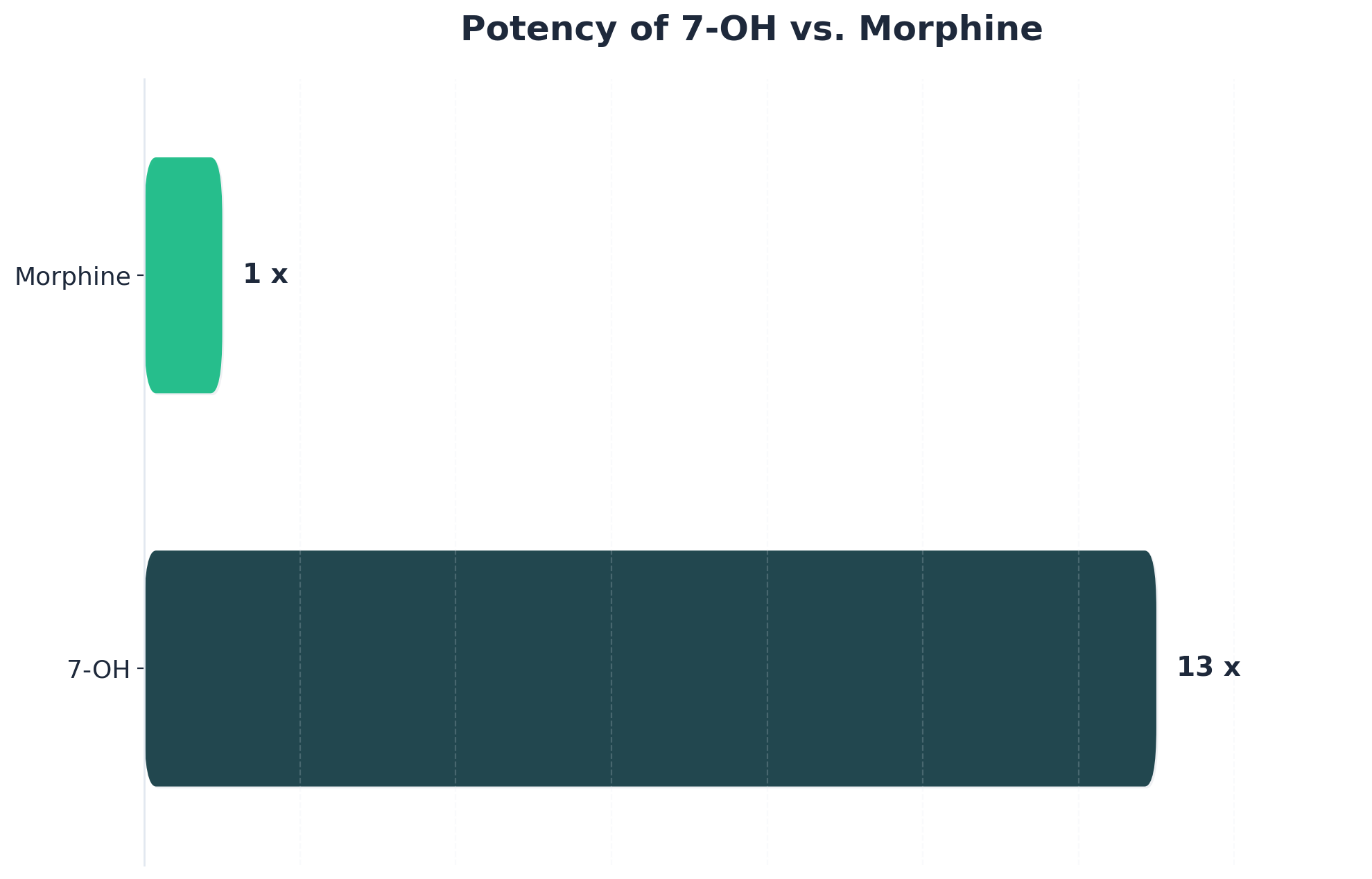
Here is where the big difference comes in: 7-OH is incredibly powerful. In fact, research shows that 7-OH binds to opioid receptors in the brain about 46 times more strongly than mitragynine and about 13 times more than morphine itself3. That means even a small amount of 7-OH can have strong, opioid-like effects on the body and brain.
Natural kratom leaf acts like a built-in safety net because it has so little 7-OH. But when products are manufactured by concentrating or adding extra 7-OH, that natural balance is lost—almost like swapping out a gentle breeze for a hurricane. This chemical transformation is at the heart of why these products are so concerning, because concentrating the chemical changes the risk profile drastically. Next, you will see how these concentrated products have shifted the entire landscape of kratom safety.
How Concentrated Products Changed the Landscape
When products containing 7-hydroxymitragynine (7-OH) started to appear in highly concentrated forms—like gummies, tablets, and vape liquids—the risks around kratom changed dramatically. Imagine natural kratom leaf as a standard cup of coffee: it has caffeine, but the dose is naturally limited by the volume of liquid you can drink. Now, picture taking that caffeine and turning it into a super-strong, concentrated energy shot. That is exactly what happened with 7-OH. Manufacturers began isolating and boosting this powerful compound, making products far stronger than the original plant ever intended.

This shift meant people could now take much higher doses of 7-OH all at once, sometimes without even realizing it. These concentrated products are often marketed in bright packaging and sold at places like gas stations and vape shops, sometimes even looking like harmless candy. This isn't just a new look; it is a completely new level of risk.
The FDA has responded by warning that these high-potency 7-OH products are much more likely to cause overdose, breathing problems, and even death, especially when combined with other substances1.
The numbers tell a powerful story: as these concentrated forms hit the market, poison center calls related to kratom soared by 1,200% between 2015 and 20252. So when asking about the dangers, the answer depends heavily on the form and the dose. Concentrated products have changed the landscape, raising the stakes for safety and professional vigilance. Next, we will explore why 7-OH's opioid-like effects make these risks even more serious.
The Science Behind 7-OH's Opioid-Like Effects
Receptor Binding Potency Compared to Morphine
To grasp why 7-hydroxymitragynine (7-OH) changes the safety profile of kratom so dramatically, it helps to picture how tightly it sticks to the brain's opioid receptors. Imagine opioid receptors as locks, and different substances as keys. Morphine is a strong key that fits snugly, unlocking pain relief—and, unfortunately, a high risk for overdose.
But 7-OH isn't just another key; research shows it fits the lock about 13 times tighter than morphine does3. That is not a small difference—it is like replacing a standard house key with the kind used to open a heavy bank vault. When a substance binds so powerfully, even tiny amounts can trigger strong opioid effects, like sedation, and at higher doses, dangerous side effects.
In fact, 7-OH's binding is also 46 times stronger than kratom's main alkaloid, mitragynine3. Because of this, concentrated 7-OH products can cause severe opioid-like reactions at doses that would be harmless if they were coming from natural kratom leaf. Yes, managing these risks is challenging, but knowing the science behind receptor binding keeps you a step ahead. Every bit of understanding helps protect those navigating opioid withdrawal and recovery.
Respiratory Depression and Overdose Risk
When you are evaluating the safety of these products, it is essential to understand how they affect breathing. Like powerful prescription opioids, 7-hydroxymitragynine (7-OH) can slow down the body's breathing to a dangerous degree—a medical condition called respiratory depression. Imagine your breathing as a steady drumbeat; opioids can muffle that beat until it is barely there.
7-OH, when taken in high concentrations, can have this exact same effect, raising the risk of fatal overdose. This is especially true if someone also uses other substances that depress the central nervous system, like benzodiazepines or alcohol. Unlike the main kratom alkaloid mitragynine—which does not typically cause significant breathing problems on its own—7-OH has been shown in studies to cause respiratory depression as severe as morphine.
Fortunately, this effect can be reversed with naloxone, but recognizing and treating an overdose quickly isn't always possible outside of medical settings4. This is why the FDA has put special warnings on concentrated 7-OH products, highlighting their risk for overdose and death, particularly as these products become more widely available and are often marketed in ways that appeal to young people1. Yes, these facts are sobering, but they are also empowering: by staying alert to the signs of respiratory depression and overdose, you help protect lives every day.
The 1,200% Surge in Poison Center Calls
Why 2025 Marked a Critical Turning Point
The year 2025 stands out as a dramatic shift in the story of kratom safety. For a long time, poison center calls about kratom were climbing slowly, but in 2025, the numbers didn't just go up—they skyrocketed. That year alone, there were 3,434 kratom exposure reports, representing a staggering 1,200% increase since 20152.
What changed so suddenly? It wasn't just that more people were using natural kratom. The real turning point was the arrival of concentrated 7-OH products in forms that look like candy or snacks, sold in places as common as gas stations and vape shops. Imagine a warning sign suddenly flashing brighter—2025 was that kind of wake-up call for the medical community.
Public health experts quickly connected the dots between the spike in emergency calls and the spread of these potent, easy-to-access 7-OH formulations. These products weren't only stronger; they were also packaged to appeal to young people, making accidental or risky use much more likely. The 2025 surge in poison center calls shows that when 7-OH goes from a trace element in leaves to a main ingredient in high-potency products, the dangers multiply fast2.
Polysubstance Use and Fatal Outcomes
Polysubstance use—mixing 7-hydroxymitragynine (7-OH) with other drugs—has played a huge role in the most severe and tragic outcomes linked to concentrated kratom products. When people combine 7-OH with opioids, benzodiazepines, alcohol, or stimulants, the risks don't just add up—they multiply. Picture each drug as a weight on a scale; when piled together, they can tip the balance from risky to deadly in an instant.
Recent data shows that 79% of all kratom-associated deaths between 2015 and 2025 involved more than one substance. This suggests that, while concentrated 7-OH is dangerous on its own, mixing it with other central nervous system depressants or stimulants greatly increases the chance of fatal overdose. This pattern has become especially clear since the surge in high-potency 7-OH products hit the market.
| Substance Combined with Kratom/7-OH | Percentage of Fatalities Involving Substance2 |
|---|---|
| Opioids | 62% |
| Benzodiazepines | 20% |
| Stimulants | 20% |
| Alcohol | 19% |
The answer to whether these products are dangerous is especially urgent for those at risk of polysubstance use. Even if managing withdrawal is your primary goal, combining substances in search of relief can quickly turn life-threatening. Every effort to support safe, single-substance use and careful monitoring counts for saving lives.
Hidden Dangers: Is 7-OH Bad Beyond Potency?
Contamination and Quality Control Failures
When asking, "is 7-oh bad," it is not just the potency that raises concern—it is also what else might be hiding inside these products. Many concentrated 7-OH and kratom products are made in facilities with little to no regulatory oversight, which means the risk of contamination is incredibly high. Imagine grabbing what looks like a harmless snack from a gas station shelf, only to find out later it was tainted with dangerous bacteria or heavy metals.
This is not just a rare fluke. In 2018, the FDA tested 66 kratom samples and found that half were contaminated with Salmonella6. These contaminated products led to a multi-state outbreak, causing serious illness and even hospitalizations. The quality problem doesn't stop with bacteria, either. Poor manufacturing processes can also introduce toxic metals or leave behind harsh chemical solvents used in extraction, making the product even more dangerous.
With no required safety testing or ingredient disclosure, people often have no idea what they are actually ingesting. For those supporting individuals in opioid crisis, this lack of quality control means the risks are unpredictable and can undermine even the safest, most professional recovery plans. Yes, these hidden dangers are frustrating, but knowing about them helps you protect those in your care.
Drug Interactions That Amplify Risk
It is not just the strength of 7-hydroxymitragynine (7-OH) that matters—it is also how this compound interacts with other medications. 7-OH and other kratom alkaloids can slow down the liver enzymes responsible for breaking down many prescription drugs, including antidepressants, statins, and especially opioids. Picture your liver as a busy traffic cop, guiding different medicines safely through the body. If 7-OH blocks the flow, these drugs can pile up to dangerous levels, even if someone takes only their usual prescribed doses.
This is especially troubling for anyone managing opioid withdrawal, since combining 7-OH with other opioids or nervous system depressants can multiply the risk of breathing problems or overdose. Studies have shown that kratom's alkaloids can interfere with key enzymes (like CYP2D6 and CYP3A), making common medications build up in the bloodstream and increasing the chance of severe side effects or toxicity5.
Yes, managing these interactions might feel overwhelming, but knowing about them helps you spot hidden risks and keep people safer. Every careful medication review and honest conversation about polysubstance use moves the recovery journey forward.
Finding Safe Support for Opioid Recovery
Finding the right support for opioid recovery means choosing a treatment program that addresses every aspect of your healing—physical, emotional, and mental. At Arista Recovery, with locations in Paola, Kansas, Hilliard, Ohio, and Overland Park, Kansas, you will find comprehensive care designed around your unique needs and circumstances.
Medical detox provides the essential foundation for safe recovery. You need 24/7 medical supervision during withdrawal, with professionals who monitor your symptoms and use evidence-based medication-assisted treatment (MAT) to manage discomfort and cravings. This isn't just about getting through detox—it is about stabilizing your body so you can focus on the deeper work of recovery. Arista Recovery offers same-day admissions because we understand that when you are ready for help, waiting can be dangerous.
Comprehensive treatment goes beyond detox to address co-occurring mental health conditions like depression, anxiety, and PTSD that often accompany opioid dependence. Dual diagnosis treatment integrates psychiatric care with addiction treatment, recognizing that lasting recovery requires healing both conditions simultaneously. You will work with compassionate therapists trained in evidence-based methods, including:
- Cognitive Behavioral Therapy (CBT): To help reframe negative thought patterns.
- Dialectical Behavioral Therapy (DBT): To build emotional regulation skills.
- Trauma-Informed Care: To safely address the root causes of substance use.
What sets effective treatment apart is the integration of experiential therapies that engage your whole self in the healing process. Equine therapy at Arista Recovery's 38-acre Paola campus helps you build trust and emotional awareness through interactions with horses. Horticultural therapy connects you with nature and provides tangible evidence of growth and nurturing. Art therapy and sand tray therapy offer non-verbal ways to process trauma and emotions that words cannot always capture. These modalities work alongside traditional therapy to create multiple pathways toward healing.
Real recovery also means treatment that fits into your life. Flexible scheduling options—from residential inpatient care to partial hospitalization, intensive outpatient, and traditional outpatient services—let you maintain work and family commitments while getting the care you need. Family programming services involve your loved ones in your recovery, rebuilding relationships and creating a support system for long-term success. And with sober living homes available, you have a safe, structured environment as you transition back to independent living.
Look for Joint Commission-accredited facilities that demonstrate a commitment to quality care standards. Verify that programs accept your insurance—Arista Recovery works with most major providers and serves patients across Kansas, Ohio, Missouri, and Oklahoma. The continuum of care should be seamless, guiding you from medical detox through residential treatment, outpatient services, and ongoing support. Recovery is absolutely possible when you have comprehensive treatment that meets you where you are and supports every step of your journey forward.
Frequently Asked Questions
Can naloxone reverse a 7-OH overdose the same way it reverses other opioid overdoses?
Yes, naloxone can reverse a 7-hydroxymitragynine (7-OH) overdose in a similar way to other opioid overdoses. Research confirms that 7-OH, the powerful compound in some kratom products, causes dangerous respiratory depression much like morphine does. Naloxone works by blocking opioid receptors, so it can restore normal breathing even after a 7-OH overdose4. However, timing is everything. Because 7-OH acts quickly and with high potency, recognizing the signs of overdose and administering naloxone promptly is critical. Is 7-oh bad? The risk is real, but having naloxone ready—and knowing how to use it—can make all the difference in an emergency.
Is natural kratom leaf safer than concentrated 7-OH products?
Yes, natural kratom leaf is considered much safer than concentrated 7-hydroxymitragynine (7-OH) products. The leaf contains tiny amounts of 7-OH, which means its effects are milder and less likely to cause overdose. In contrast, concentrated 7-OH products pack a much bigger punch—7-OH binds to opioid receptors about 13 times more strongly than morphine and 46 times more than the leaf’s main alkaloid, mitragynine3. This makes it much easier to experience dangerous side effects, including life-threatening breathing problems. As a result, the FDA has focused its regulatory actions on these concentrated products, not on the natural leaf1. So, when thinking about "is 7-oh bad," the risks are dramatically higher with concentrated forms.
What medications interact dangerously with kratom and 7-OH?
Certain medications interact dangerously with kratom and its powerful compound, 7-hydroxymitragynine (7-OH). 7-OH can block liver enzymes (especially CYP2D6 and CYP3A) that help break down many drugs, causing those medications to build up in the body. The biggest risks come with opioids, antidepressants, antipsychotics, statins, blood thinners, and benzodiazepines. This means combining kratom or 7-OH with these medicines can raise the chance of severe side effects like breathing problems, sedation, or overdose—even if each drug alone would be safe. For anyone asking "is 7-oh bad," these drug interactions make it even more dangerous, especially for people in opioid crisis or recovery5.
How can you tell if a product contains concentrated 7-OH versus natural kratom?
To tell if a product contains concentrated 7-OH or just natural kratom, first check the label and packaging. Natural kratom leaf is usually sold as a powder or in capsules and lists only plant ingredients. Concentrated 7-OH products often advertise themselves as "enhanced," "extract," or come as gummies, tablets, or vape liquids—sometimes with bold claims about strength. These products are often sold in flashy packaging at gas stations or vape shops. Be cautious: many concentrated 7-OH items are not clearly labeled and may look like regular supplements or candy. If you’re ever unsure, remember that is 7-oh bad is a real concern for these concentrated forms1.
Does using kratom during pregnancy affect the baby?
Using kratom during pregnancy can seriously affect the baby. Studies show that when a pregnant person uses kratom, both the mother and newborn can go through withdrawal after birth. Many newborns exposed to kratom develop symptoms of Neonatal Abstinence Syndrome (NAS)—like irritability, feeding troubles, and tremors—and often need special treatment and longer hospital stays, sometimes around 10 days or more. This happens because kratom contains compounds, including 7-OH, that act like opioids in the body. So, is 7-oh bad during pregnancy? The risks are real and well-documented, making careful medical guidance absolutely necessary for anyone in recovery who is or could become pregnant8.
Why are some states banning kratom while others allow it?
States make different choices about kratom because of both safety concerns and disagreements over its risks and benefits. Some states have banned kratom—especially concentrated 7-OH products—after seeing huge spikes in poison center calls, hospitalizations, and deaths from these powerful forms12. Others allow kratom, but may limit sales to adults or require warning labels. The big reason for this patchwork is that the FDA and CDC have raised alarms about is 7-oh bad, but federal law hasn’t made kratom illegal across the board. So, states step in based on local data, public health needs, and pressure from both advocates and families affected by overdose. Each step toward safer policy helps protect lives, even when the rules aren’t the same everywhere.
What withdrawal symptoms can you expect when stopping 7-OH or kratom use?
When stopping 7-hydroxymitragynine (7-OH) or kratom, withdrawal symptoms can feel a lot like those from other opioids. Common symptoms include muscle aches, trouble sleeping, anxiety, sweating, runny nose, irritability, stomach cramps, and diarrhea. If someone has been using concentrated 7-OH products, the symptoms may start quickly and feel especially intense, sometimes leading to cravings or mood swings. Most people experience withdrawal for about a week, but some may feel lingering effects longer. Is 7-oh bad? The risk of strong, opioid-like withdrawal is one of the reasons experts urge caution with these products3.
References
- FDA Takes Steps to Restrict 7-OH Opioid Products Threatening American Consumers. https://www.fda.gov/news-events/press-announcements/fda-takes-steps-restrict-7-oh-opioid-products-threatening-american-consumers
- Increases in Kratom-Related Reports to Poison Centers. https://www.cdc.gov/mmwr/volumes/75/wr/mm7511a1.htm
- Kratom—Pharmacology, Clinical Implications, and Outlook. https://pmc.ncbi.nlm.nih.gov/articles/PMC7203303/
- Mitragynine and 7-Hydroxymitragynine: Bidirectional Effects. https://pmc.ncbi.nlm.nih.gov/articles/PMC12140000/
- Translating Kratom-Drug Interactions: From Bedside to Bench. https://pmc.ncbi.nlm.nih.gov/articles/PMC10353077/
- A Multiple-Serotype Outbreak of Salmonella Infections Linked to Kratom. https://pmc.ncbi.nlm.nih.gov/articles/PMC10961741/
- Kratom as a potential substance use disorder harm reduction agent. https://pmc.ncbi.nlm.nih.gov/articles/PMC11169875/
- Outcomes of mothers and newborns to prenatal exposure to kratom. https://pmc.ncbi.nlm.nih.gov/articles/PMC8225511/
- Kratom Product Misrepresentation Investigation. https://classlawdc.com/2025/07/15/kratom-product-misrepresentation-investigation/
- WHO recommends 3 NPS for scheduling. https://www.unodc.org/LSS/announcement/Details/9570c3b9-128d-46f2-808a-7bf8ec20527d